- Pique Behind the Curtain from Pique Action
- Posts
- Alley-Oop! Turning L.A.’s Dead Weight into a Neighborhood Sponge 🧽🌿
Alley-Oop! Turning L.A.’s Dead Weight into a Neighborhood Sponge 🧽🌿
In neglected alleyways of the City of Angels, a network of water-saving public green spaces is sprouting up. Green Alleys are once-neglected backstreets retrofitted with permeable surfaces and native plants to capture stormwater while providing safe, beautiful public space.

Hana Leshner
March 20, 2026
— Written by Hana Leshner & The Pique Team
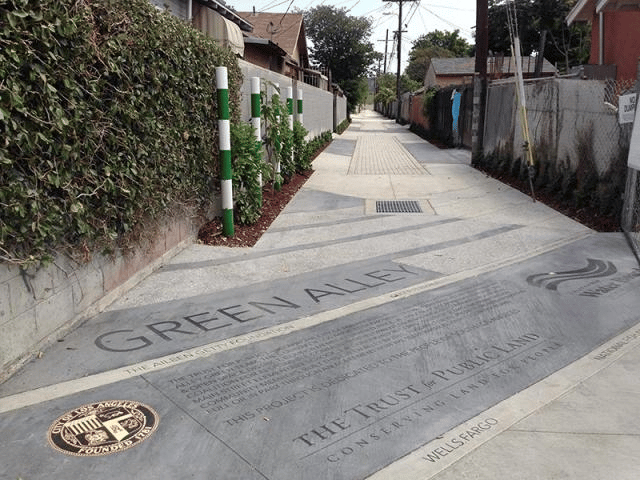
Photo by Trust for Public Land
Do you enjoy our weekly newsletter? Please forward to a friend! If you don’t already subscribe you can do so here 👉 subscribe here!
Welcome back to Climate Blueprints, our special Pique Behind the Curtain mini-series zooming in on local projects building resilience to climate change in the Los Angeles region in the lead up to lead up to LA Climate Week. This week, we’re heading to South LA to see how a network of forgotten alleys was transformed into a "green machine" that’s paving the way for a cooler, more connected neighborhood. It’s working there, and it could work in your neighborhood too. 🏗️🌱
The Avalon Green Alleys 🌊🛣️
In South LA, nearly 900 miles of alleys were once seen as magnets for flooding and illegal dumping. But the Avalon Green Alley Network flipped the script. By replacing cracked asphalt with light-colored, permeable pavers, these alleys now act like giant sponges.
When heavy rains hit, instead of flooding the streets and carrying pollutants to the ocean, the water sinks in to underground infiltration trenches. This recharges our local groundwater basins—the giant "underground piggy banks" we rely on during droughts. Plus, the light-colored paving helps kick back solar heat, keeping the neighborhood significantly cooler during those unbearable heatwaves. 🧊☀️
This isn't just a flash in the pan, either. The original 2016 project continues to function, with a 2023 study proving its "sponge-worthy" status by capturing and cleaning thousands of gallons of rainwater. Its success has paved the way for a whole new network of green alleys, inspiring projects like the Central-Jefferson and Quincy Jones corridors, and directly influencing the South LA Green Alley Master Plan. This original project is now a thriving model for a cooler, safer city.
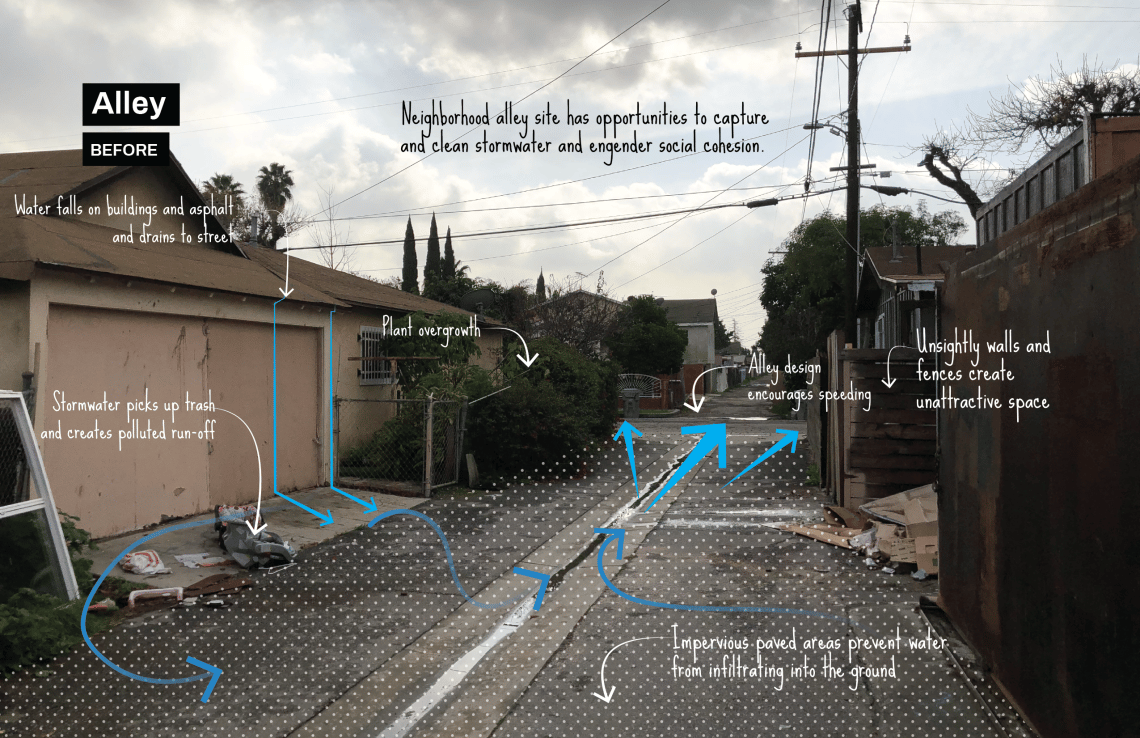
Photo by Trust for Public Land
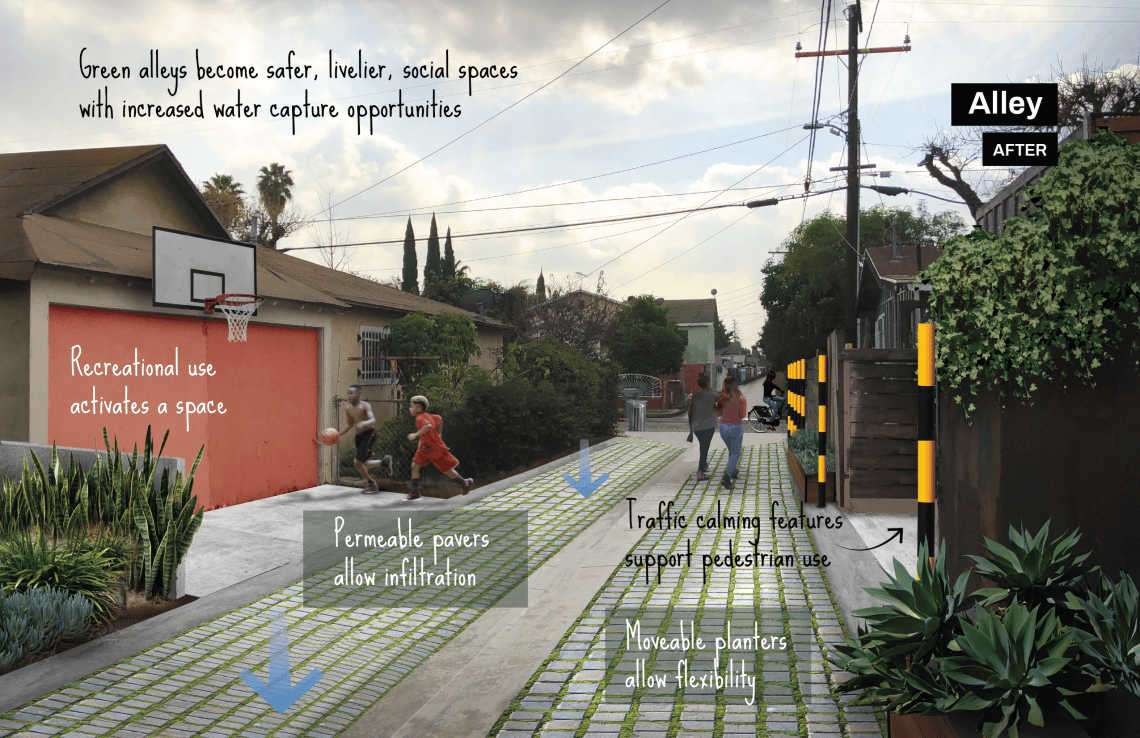
Photo by Trust for Public Land
The Asphalt-Alt: L.A.’s Pavement Problem 🛑🛣️
Why focus on alleys? Because Los Angeles has a serious pavement addiction. A recent report called DepaveLA (and an eye-opening feature in the LA Times) found that LA County is covered in 488 square miles of pavement—an area the size of the entire city of Los Angeles!
The kicker? Researchers found that nearly half of that pavement is completely unnecessary. It’s just dead weight that traps heat and prevents rain from reaching the soil. By depaving these spaces and turning them into green corridors, paving the path toward a more breathable city.
The Climate + Community Connection ❤️💪
In neighborhoods that lack green space, these alleys can be more than just water filters—they are safe routes to school and community hubs. This is a prime example of multi-benefit infrastructure, which is the practice of designing a project that solves several community problems at once—like tackling flood risk while simultaneously boosting health and happiness.
By prioritizing these projects in South LA, the city is addressing environmental justice head-on. We’re taking blighted spaces and turning them into vibrant hubs. This double-duty design provides a massive boost to:
Public Health: By swapping heat-trapping asphalt for plants, we’re lowering the "fever" of the neighborhood. Cooler streets mean fewer heat-related illnesses and more opportunities for exercise, which is a breath of fresh air for community wellness. 🏃♀️🌬️
Social Cohesion: Social cohesion is the glue that binds a community together through trust and shared experiences. When an alley becomes a clean, beautiful walkway, it acts as "social cement." Neighbors stop to chat, kids play safely, and the sense of community pride grows. It’s infrastructure with a pulse! 💓🏘️
The Big Lift 💪
This project was a five-year labor of love from a massive team of partners:
The Visionaries: The Trust for Public Land (TPL) led the charge, partnering with LA Sanitation and the Council for Watershed Health.
The "Equipo Verde" (Green Team): The real MVPs are the local residents, like the dedicated neighborhood moms and grandmothers known as Equipo Verde. They meet monthly to organize cleanups and plant trees—they are roots that keep the project growing! 🌱🤝
My Local Blueprint 🏘️🚰
You don't need a construction permit to help your neighborhood thrive. Living Infrastructure is the practice of combining built, natural, and social systems to help people and places thrive together. This week, take 15 minutes to:
Pique into the Data: Even if you aren't in LA, check out the Living Infrastructure Field Kit to see how built, natural, and social systems can be mapped together. It’s a map-nificent model for how any city can identify where a green-up is needed most. 🗺️✨
Spot the Dead Weight: Take a walk around your own block and look for unnecessary pavement—think wide, unused driveway aprons or cracked concrete patches that could be a garden. Identifying the potential is the first step to a groundbreaking project! 🌿🕵️
Cultivate the Canopy: Visit National Wildlife Federation’s Native Plant Finder (or your local equivalent) to find one plant that belongs in your specific ecosystem. Planting even one native species helps turn your home into a tiny wildlife corridor. Resilience can start in your own backyard. 🌸🐝
From the Pique Archives: More Sponge City Solutions 🏠💧
Want to see how other cities are adapting by building a circular water system? Dive into the Pique Archives and check out the Field Factors story, highlighting how the Rotterdam Zoo reuses 9 million liters of water per year. It's more proof that being "sponge-worthy" works at every scale!