- Pique Behind the Curtain from Pique Action
- Posts
- Climate Week Won’t Save Us. That’s Why We're Going. 🗽
Climate Week Won’t Save Us. That’s Why We're Going. 🗽
Climate policy is moving backward in some places. Climate impacts are moving forward everywhere. And somehow, a lot of climate solutions are accelerating anyway. So what exactly are we hoping to accomplish by parachuting into New York for a week?

Kip Pastor
September 17, 2026
— Written by Kip Pastor & Ivy Sheibar
Do you enjoy our weekly newsletter? Please forward to a friend! If you don’t already subscribe you can do so here 👉 subscribe here!

New York Climate Week is almost here…. which means thousands of us are about to descend on New York City to spend seven days talking about how to save the planet while sprinting between panels and occasionally realizing that the next event is 38 blocks away.
It is easy to say Climate Week is a bunch of climate-committed folks talking to each other. It is also easy to wonder whether any of this matters. And this year, that question feels particularly fair.
The Bad News Is…Bad 🌡️
The climate-policy picture in the U.S. has changed dramatically. Just this week, the EPA repealed federal carbon-emissions limits for coal- and gas-fired power plants, part of a broader rollback of federal climate policy. (Reuters)
Meanwhile, the atmosphere is spectacularly uninterested in our politics.
August 2026 tied with the hottest month ever in the instrumental record (July 2023), amid extreme heat, drought, wildfire and flooding around the world. And the World Meteorological Organization now expects the developing El Niño to become very strong, increasing the risk of extreme heat, droughts and floods in parts of the world into 2027. Climate change doesn't “cause” every individual disaster, but human-caused warming has already increased the frequency and intensity of heatwaves, with further warming expected to increase them further. (World Meteorological Organization)
Globally, we're still not on anything resembling the easy path. UNEP estimates that even if countries fully deliver their current climate commitments, the world is heading toward roughly 2.3–2.5°C of warming this century. Under current policies, the projection is about 2.8°C. (UNEP - UN Environment Programme). So while there are reasonable grounds for doom, doom is not particularly useful.
And Yet…Things Are Happening ☀️
And here is the strange part about the climate story in 2026: at the same time that climate policy has become more hostile at the federal level in the U.S., the transition itself has not simply stopped.
U.S. developers entered 2026 planning a record 86 gigawatts of new utility-scale generating capacity. More than half of it is solar; another 28% is battery storage and 14% is wind. Battery-storage capacity alone has been growing extraordinarily fast (U.S. Energy Information Administration).
Globally, the IEA expects about $2.2 trillion to be invested this year in renewables, nuclear, grids, storage, low-emissions fuels, efficiency and electrification—almost twice the investment flowing toward fossil fuels (IEA). Even in the U.S., businesses continue investing in clean energy despite the policy reversals, in part because electricity, resilience and energy security are increasingly business issues rather than simply “climate” issues (Reuters).
Progress has become messy.
Some institutions are moving backward. Others are moving forward. Governments, markets, technologies and communities are no longer traveling neatly in the same direction. Nor is the US or EU. Which brings us back to Climate Week.
So…Why Go? 🤔
Climate Week NYC runs September 20–27 this year, with more than 1,000 events bringing together people from business, government, finance, technology, activism and civil society. (Climate Week NYC)
But I don't think the reason to go is because 1,000 panels are going to solve climate change. I’m going because coordination may be one of the most underrated climate technologies we have.
A technologist can build a better battery and still need capital, permitting, customers and public acceptance.
A policymaker can write an ambitious law and still need companies capable of implementing it.
A storyteller can change how millions of people understand an issue, but only if they are talking to people outside the climate communications bubble.
And when a flood, fire, hurricane or heatwave arrives, none of those things matters very much if communities haven't built the relationships, resiliency, or infrastructure needed to respond. Climate Week takes people who spend most of the year operating in separate systems and jams them into the same few square miles. These collisions are the point.
My Climate Week Experiment 🧪
Looking at my calendar this year, I realized I'm trying to understand the climate problem from a few very different directions.
I’ll be at State Power and Climate Policy Receipts because if federal action is constrained, I want to understand what states can actually accomplish.
I believe we still have a massive communications problem, and this is where Pique gets in the mix. I’m speaking on the panel Amplifying Creator Voices to Reach New Audiences at the Climate Film Festival, and with Harvard on their panel at the intersection of climate, health and communications. Ivy will be speaking on the SDG MediaZone panel on how storytelling drives trust and social change in the AI era. We’re also going to cover many more, including
Where Sustainability Meets Storytelling, The Big Narrative Debate, Who’s Really Talking About Climate?, and – yes – Can Sex Sell…Climate? because climate solutions scale when they gain your attention, and then your trust.
I’ll be digging into what gets built at Supercharging Climate Action, the Climate Tech Demo Series, Rethinking Enterprise AI, and Climate Solutionists Hiding in Plain Sight. Because somewhere between the trillion-dollar investment numbers and the press releases are actual technologies that either work, don't work, scale, or don't scale.
And I’m particularly interested in Adaptation in Action! For a long time, climate conversations treated adaptation almost like admitting defeat. Mitigation was how we saved the future; adaptation was what happened if we failed.That distinction makes less sense every year.We have to cut emissions and prepare communities for impacts that are already arriving.
Then there is F*ck Doom Hour, which may be the most accurately named event at Climate Week. Because optimism does not require pretending everything is going well. And sometimes we need a drink or two with comrades for a release.
Maybe We Need a Different Kind of Optimism 🌎
There is a version of climate optimism that says: Don't worry. Technology will solve this. I don't find that particularly convincing. I’m interested in a resilient version. Call it stubborn optimism. We can, we have to, do something.
We understand that more climate shocks are coming. We understand that policy victories can be reversed. We understand that vested interests don't disappear because a cleaner technology exists. And then we get to work anyway.
We build cheaper energy. We make communities harder to knock down. We change policy where policy can be changed. We tell better stories. We meet people outside our particular corner of the movement. We build relationships before we desperately need them.
That, to me, is what Climate Week can actually be for. A week where you might meet someone who changes the way you see the problem. Where a weird conversation becomes a partnership. Where capital meets an idea. Where an activist meets an engineer. Where somebody finally asks the question their entire industry has been avoiding.
And then everybody goes home and does something about it.
What Do I Hope to Get Out of Climate Week?
Not another tote bag. Or some blisters. I want to leave with one assumption challenged, a few people I didn't know before, and at least one idea that turns into something real after everyone leaves New York.
Because Climate Week isn't going to save us. But the relationships, technologies, policies, communities and ideas we build there just might help us save ourselves.
And that's worth showing up for.
What are you hoping for? Let us know.
What climate week events are you excited about? What do you want to get out of it? Shoot us a line and let us know! Search the event calendar below for more.
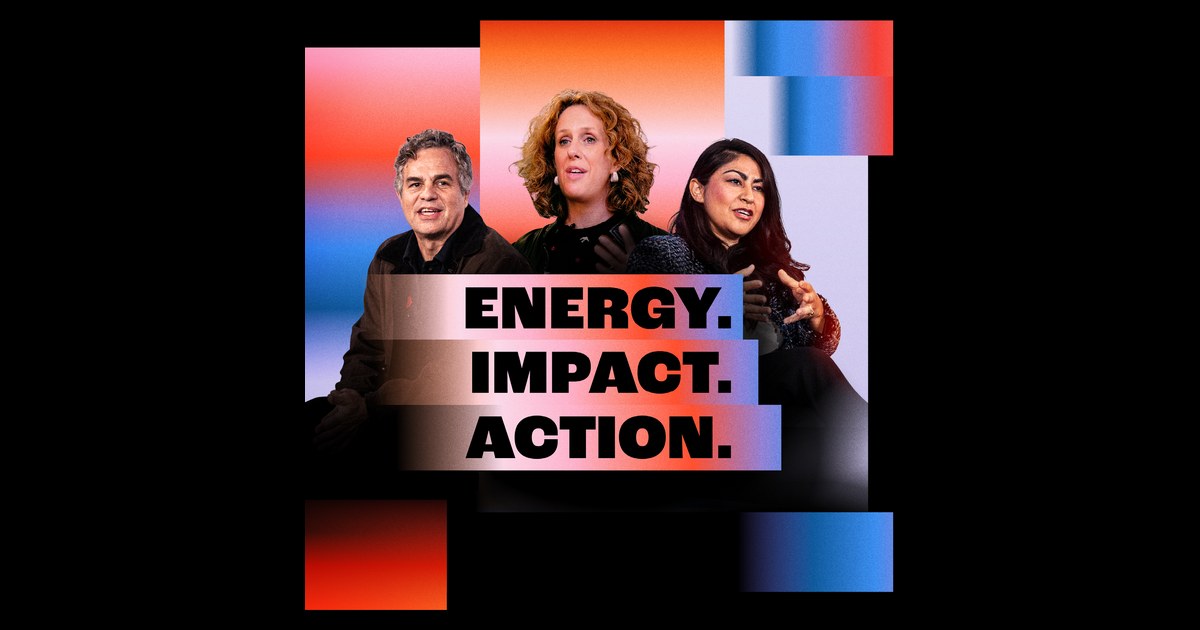
We Need Your Feedback! Please take our survey! 📋️
We want to know: What do you want to know more about? What do you want more of?
We’re a small team, and we make this newsletter because we genuinely love finding climate stories that make the future feel more interesting, hopeful, and possible. But we’d rather build the newsletter with you than guess what you want.
So: 8 questions. About 2 minutes.
As a thank-you, you’ll be entered to win an RTIC travel mug (our highly scientific assessment: extremely good mug) or a Pique hoodie.