- Pique Behind the Curtain from Pique Action
- Posts
- So Mulch Potential: Turning Your Yard Into an Ocean Hero 🪴🌊
So Mulch Potential: Turning Your Yard Into an Ocean Hero 🪴🌊
We’ve spent a lot of time looking at massive city infrastructure, but today we’re bringing the climate action right to your backyard. 🏡✨ Today we digging in to the best ways to turn lawns and public gardens into mini-sponges to protect our waterways and oceans.

Hana Leshner
April 09, 2026
— Written by the Pique Team

Do you enjoy our weekly newsletter? Please forward to a friend! If you don’t already subscribe you can do so here 👉 subscribe here!
Welcome back to Climate Blueprints, a Pique Behind the Curtain mini-series, where we look at the neighborhood-level infrastructure keeping our cities livable. We're zooming in on the Los Angeles region in the lead-up to LA Climate Week (April 8-15) to see how local projects are turning global goals into tangible community wins.
Ocean Friendly Gardens: The "CPR" of Gardening 🌻
Traditional lawns are basically slip-and-slides for pollution. One inch of rain falling on the roof of an average home generates about 1,200 gallons of runoff. As that water zips into the street, it picks up oil, trash, and fertilizers, making it the #1 source of ocean pollution. But there are ways to mitigate this!
The Watershed Approach is a landscaping philosophy that treats every individual yard as a mini-watershed, designed to manage rainwater on-site to prevent pollution from reaching the coast. 🌧️🧼 Instead of treating rain like a nuisance to be shunted into the street, this method turns your property into a sponge that protects our local surf. 🏄♂️
“Clean water at the beach starts upstream in our yards and community spaces! Together we can create more resilient, hydrated watersheds that are better prepared for climate extremes.”
The Surfrider Foundation’s Ocean Friendly Gardens (OFG) program uses the CPR method to stop the "drain" on our ecosystems:
Conservation: Swapping thirsty grass for native plants that thrive on local rainfall. 🌵
Permeability: Replacing concrete with living soil and mulch. Healthy soil acts like a carbon-sequestering filter, pulling CO2 from the air and locking it underground. 🧽
Retention: Using swales (shallow trenches) and rain barrels to slow, spread, and sink water back into the aquifer. It’s a "shore" way to keep our water table full! 💧💰
Public Spaces & Community Power 🤝🌳
You don't need a backyard to see an OFG in action! Surfrider chapters across the Los Angeles area are branching out into public spaces, transforming schools, libraries, and parkways into resilient green hubs.
Long Beach Leadership: The Long Beach Chapter has been a powerhouse, organizing volunteer workdays to install and steward gardens that everyone can enjoy. These projects are hard-working green infrastructure that help keep the oceans clean for every swimmer and surfer.
National OFG Map: Want to go on an urban safari? You can find certified gardens near you using the National OFG Map. It’s a great way to get some "ground-breaking" inspiration for your own space! 🗺️📍
Community Stewardship: These public gardens are possible thanks to incredible local volunteers who protect them and keep them free of weeds.
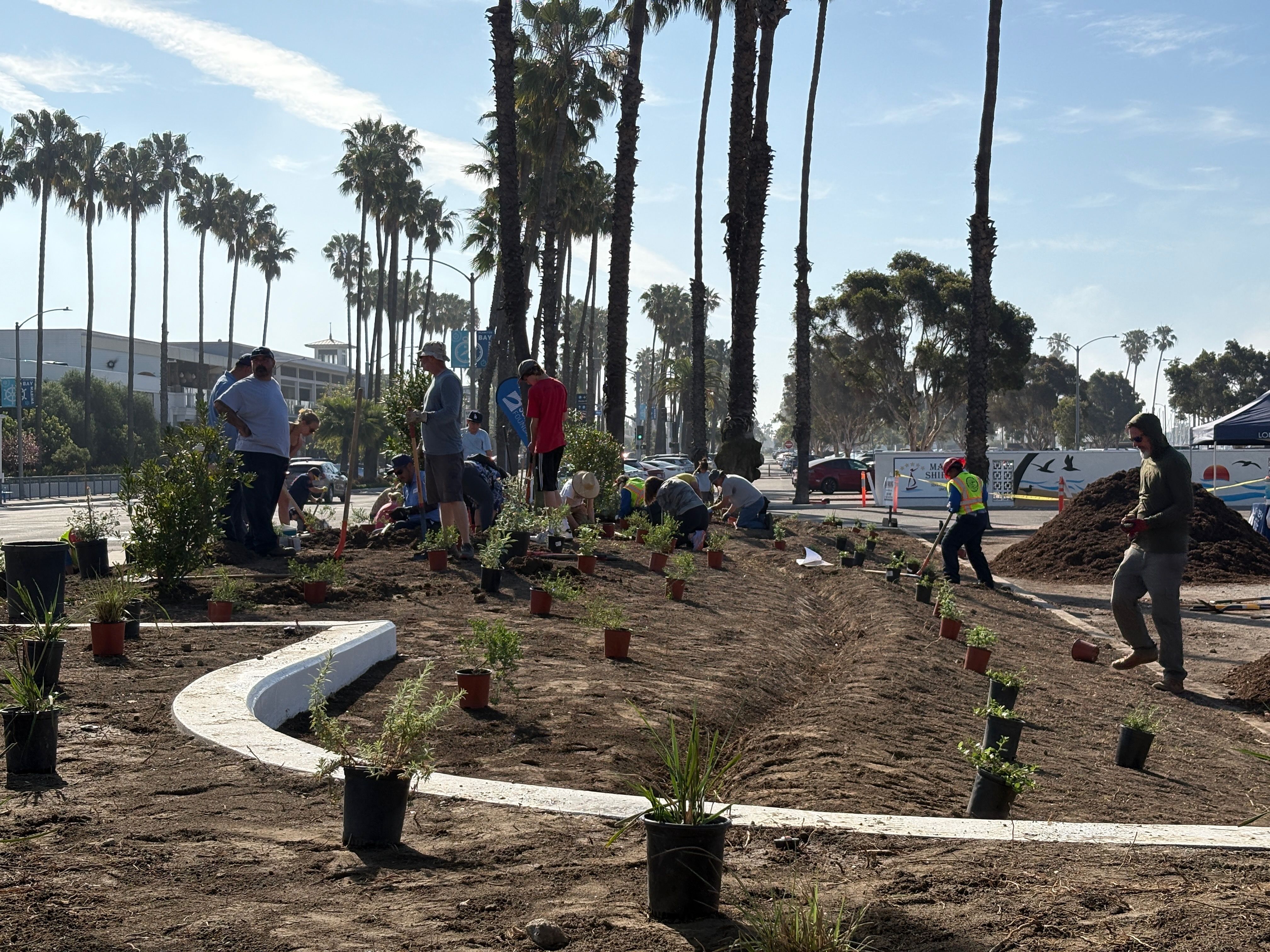
Community installs OFG Project in Long Beach, Photo by Kathryn Dressendorfer
Why It Matters: Soil is the Soul of Resilience 🏙️🧪
It’s not just about clean water. Healthy soil lays the groundwork for a better climate all-around.
Carbon Capture: Biologically active soil (boosted by compost!) is a powerhouse at sequestering carbon.
Methane Reduction: Composting your yard waste prevents it from rotting in a landfill and releasing methane—a greenhouse gas that’s 20x more potent than CO2. 🍎🌀
Urban Cooling: Native gardens reduce the heat island effect better than artificial turf ever could. It’s time to stop playing it safe with lawns and start playing it smart with soil! 🦋✨
The Brains & Banks Behind the Gardens 🧠💸
This movement is led by the Surfrider Foundation, which has turned dirt-under-the-fingernails activism into a nationwide resilience strategy.
The Visionaries: Surfrider chapters (like the ones in LA and Long Beach) partner with city of Long Beach and community partners to provide hands-on training.
The Funding: Programs like the Direct Install Program (DIG) in Long Beach use funds from the California Coastal Conservancy to provide free ocean-friendly makeovers for homes in low-income neighborhoods. 💵🌱
The Rebates: Most SoCal residents can get paid to un-pave paradise through Turf Replacement Rebates (check out LADWP or SoCal WaterSmart).
My Local Blueprint 📣
You don't need to be a landscape architect to make a splash. This week, take 15 minutes to:
Contour Your Thinking: Identify where rain flows off your roof. Can you point your downspout toward a garden bed instead of the driveway? 🚿🧐
Mulch Ado About Everything: Apply at least 2-3 inches of organic mulch (like wood chips) around your plants. It suppresses weeds, builds soil health, and keeps moisture locked in. 🪵🌿
Go Organic: Ditch the synthetic fertilizers. Try a handful of worm castings or compost instead—your local microbes will thank you! 🪱🍵